Diplomatic Uproar Amid Visa Revocations
The recent decision by the United States to revoke visas for Brazilian Supreme Court justices and Judge Alexandre de Moraes has sent ripples through both diplomatic and legal circles. What might seem like a straightforward administrative action is, in fact, a politically charged maneuver that touches on tricky parts of international law, tangled issues of sovereignty, and the off-putting intersections of domestic politics with foreign affairs.
While at first glance the visa revocations appear to be a tactical response to court orders issued against former President Jair Bolsonaro, a closer look reveals a web of political, legal, and diplomatic maneuvers. Both American and Brazilian officials have been forced to figure a path through these challenging twists and turns as each side seeks to protect its interests.
Understanding the Context of Brazil’s Judicial Actions
Brazil’s Supreme Court has been actively involved in curbing actions that lawmakers and the judiciary view as a threat to national sovereignty. In particular, the court recently issued search warrants and restraining orders against Bolsonaro, measures designed to prevent him from contacting foreign officials and potentially destabilizing Brazilian democratic processes.
These legal steps were taken against a backdrop of years of political tension and high-profile challenges to the rule of law. Bolsonaro’s actions, which some critics say aimed to exploit political opportunities abroad, cross paths with the complicated pieces of Brazil’s legal system. By acting against Bolsonaro, the Brazilian judiciary intended to curb what it saw as attempts at foreign interference—an effort that now appears to have spurred a retaliatory diplomatic action by the United States.
US Intervention: Unpacking the Visa Revocation Measures
U.S. Secretary of State Marco Rubio’s decision to revoke the visas of Judge Alexandre de Moraes and seven other justices—as well as their immediate family members—signals a strong, unsparing approach to addressing what it views as intrusive judicial actions in Brazil. This move is a clear reminder that diplomatic tools such as visa revocation are used not only to enforce immigration policies but increasingly as instruments of political warning and international leverage.
Visa Revocation as a Diplomatic Tool
The United States has long used visas as a way to control which individuals are allowed into its borders. However, in cases like these, revoking visas is less about border security and more about sending a super important message. The visa revocation is meant to highlight the perceived risk of judicial decisions that might encourage political extremism and inter-government interference.
This action demonstrates how international law and domestic politics in one country can have significant consequences on transnational relations. The case exemplifies how legal measures taken within a country—no matter how intended to protect national values—can trigger a cascade of decisions from other nations using their own legal and diplomatic authority.
Implications for US–Brazil Relations
The repercussions of this decision reach far beyond the individual visa holders. They affect the overall fabric of US–Brazil relations, raising fundamental questions about diplomatic reciprocity and respect for national sovereignty. As the United States uses visa restrictions as a tool of political coercion, diplomatic channels are forced to contend with a host of confusing bits and subtle details that may jeopardize long-standing alliances.
For Brazil, the revocation of these visas is a signal that its own judicial decisions could have substantial and perhaps unintended international consequences. The move by the US has ignited considerable debate—not only among diplomats but also in academic and legal circles—about the appropriate balance between enforcing domestic legal decisions and respecting international norms.
The Legal and Political Underpinnings of the Visa Revocations
At the heart of this episode lies a complicated dance between law and politics. On one side, the Brazilian Supreme Court is engaged in what it believes is a necessary crackdown on actions that compromise national security and the integrity of its political system. On the other, U.S. authorities have leveraged visa revocation as a means to express disapproval of what they perceive as politically motivated legal orders coming from Brazil.
Critics argue that the use of visa revocations in this context is a form of diplomatic brinkmanship—a nerve-racking act that might push both nations toward deeper confrontation. Supporters, however, view it as a critical stance against any legal arbitrariness that could manifest into broader authoritarian practices. Regardless of the interpretation, the move is undeniably a high-stakes affair, loaded with the potential for future diplomatic fallout.
Legal Uncertainties and Diplomatic Constraints
The decision to control access through visa revocation touches upon several fine points and hidden complexities of international law. Travel documents and visas, often seen as mere bureaucratic instruments, can become strategic levers that determine how states interact with one another. Here, the U.S. decision is a clear example of the international community’s struggle to get around the confusing bits of jurisdiction and sovereignty.
Examining the Fine Points of Cross-Border Law
International law is full of subtle parts and small distinctions that can make a significant difference in how actions are perceived and enforced. In this case, the U.S. has taken a stance that might appear unilateral but is grounded in its broader foreign policy strategy. By punishing those linked to judges who have taken action against a former head of state, the US government sends a message that any measure seen as compromising stable political orders—especially when intertwined with interference by foreign powers—will be met with a strong, even if controversial, response.
There are a few key legal aspects to consider:
- Jurisdiction: The extent to which one nation’s legal decisions can be scrutinized or impact another nation’s domestic affairs.
- Sovereignty: How one state’s internal legal struggles can trigger external interventions, particularly through administrative channels like visa control.
- Consistency: The overall approach of the United States in enforcing its policies and the possibility of setting a precedent for future cross-border legal disputes.
Each of these points is a puzzle piece in understanding the overall impact of the U.S. decision. They help frame a scenario where actions taken within one national context may inadvertently ripple across international borders, leading to a series of unpredictable diplomatic engagements.
US State Department: Functions and Responsibilities
It is instructive to consider the role of the U.S. State Department in this unfolding drama. The State Department is tasked with far more than just issuing travel documents; it is also responsible for protecting national security, promoting American interests abroad, and ensuring that international engagements are consistent with the nation’s values and policies.
In this context, the revocation of visas is a tactical decision meant to respond to judicial actions in Brazil that the U.S. views as potentially destabilizing. Key responsibilities involved in this decision include:
- Assessing legal orders that could have international ramifications.
- Evaluating the risk of diplomatic fallout from unilateral decisions.
- Balancing domestic political pressures with international diplomatic etiquette.
- Ensuring that the action aligns with broader U.S. foreign policy objectives, particularly in regions where political instability could have cascading effects.
This balancing act, replete with its own tangled issues and hidden complexities, is indicative of how the intersection of law and politics has become increasingly blurred in the international arena.
Tangled Issues: The Role of Political Rhetoric and International Pressure
While legal arguments often dominate official statements, the reality is that political rhetoric is seldom far behind. Comments made by figures such as former President Donald Trump have added layers of tension to an already volatile situation. Trump’s public pronouncements—ranging from tariff threats to criticisms of judicial processes—illustrate how political language can exacerbate legally contentious issues.
For instance, when Trump threatened to impose tariffs on Brazilian goods, it wasn’t merely economic policy at stake; it was also a pointed gesture against what he perceived as an attack on his ideological ally, Bolsonaro. In doing so, he tapped into a narrative that paints the Brazilian judiciary as overreaching and politically biased.
Political Rhetoric: Exacerbating the Diplomatic Storm
The use of politically charged language by influential figures can sometimes turn a legal issue into a titanic controversy. By calling Judge Moraes a “dictator” or labeling court orders as acts of “cowardice,” Bolsonaro and his supporters have added nerve-racking twists and turns to the situation. Such comments reveal the hidden complexities of political manipulation in sensitive legal cases.
The following table outlines some of the critical points raised by various political actors:
| Actor | Key Statement | Underlying Implication |
|---|---|---|
| U.S. Secretary of State | Visa revocations against high-profile judges | Signals a firm stance on international legal interference |
| Former President Trump | Threat of hefty tariffs | Uses economic pressure to support political allies |
| Bolsonaro | Criticizes judicial orders as cowardly | Attempts to delegitimize actions taken by domestic institutions |
These points help capture the essential dynamic at work: while legal justifications provide one layer of explanation, political rhetoric weaves an even more complicated pattern, one that moves beyond legal sanctions to touch on public sentiment and international image.
Impact on Institutional Credibility
The credibility of institutions on both sides of the Atlantic is at stake. As the U.S. exercises its authority through visa restrictions, Brazilian judicial institutions may find themselves on the defensive. This tit-for-tat of political and legal measures risks undermining public confidence, not only in the individuals involved but also in the systems that have allowed such tensions to emerge.
Critics warn that both nations need to work through these tricky parts in a measured manner. By engaging with one another in a spirit of dialogue rather than confrontation, they might be able to soothe public anxieties and avoid further escalation.
Bolsonaro’s Response and the Judicial Reckoning
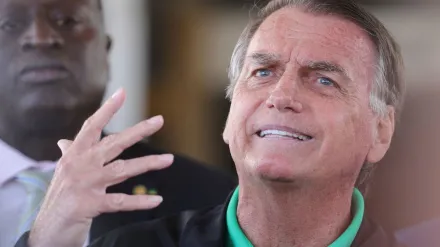
Former President Bolsonaro’s reaction to these legal and diplomatic maneuvers has been one of deep indignation and bitter criticism. In interviews, Bolsonaro denounced the court orders as politically motivated and personally humiliating, referring to them as the work of a “weaponized” judicial system. His comments illustrate the personal toll that this flashpoint is exacting on Brazil’s political class.
Bolsonaro’s insistence that he remains a victim of a so-called “witch hunt” underscores the off-putting nature of the debate. Amid the nerve-racking allegations and personal attacks, what emerges is a picture of a deeply polarized political environment where every legal action is laced with suspicion and every diplomatic move carries heavy symbolic burdens.
Public Opinion: Divided Views and Uncertain Outcomes
Within Brazil, public opinion is rife with mixed feelings. Many Brazilians, particularly supporters of Bolsonaro, see these measures as an outright attack on their political identity. They argue that the visa revocations are not merely administrative decisions but are part of a larger strategy by international powers to interfere in Brazil’s sovereign affairs.
On the other side, advocates of the judiciary’s tough stance contend that such steps are essential to prevent foreign interference. They claim that allowing political figures—especially those who have been implicated in attempts to subvert democratic processes—to evade accountability would set a dangerous precedent. In this light, the visa revocations are seen as a super important safeguard designed to uphold democratic norms.
In summary, the polarized reactions have created a situation that is both complicated and full of issues. Whether these divisions will eventually lead to constructive reform or further polarization remains to be seen.
Legal and Political Lessons From This Diplomatic Standoff
The visa revocations offer a telling case study on how legal decisions and international politics can become deeply intertwined—and how administrators on both sides are forced to get into the nitty-gritty of the situation. The interplay between national legal orders and international diplomatic responses is replete with subtle details that often escape casual observers.
Lessons on the Use of Diplomatic Tools
There are several key lessons to be learned from this unfolding scenario:
- Diplomatic Leverage: Visa controls are more than technical instruments. They can be wielded as strategic tools in high-stakes political negotiations.
- Domestic Policy and International Impact: Decisions that may seem purely internal can have far-reaching effects on global relations, exposing the tricky parts of international diplomacy.
- Legal Consistency: Balancing domestic legal processes with international expectations is a tightrope walk filled with tense moments and surprising reversals.
- Public Perception: The reputations of both judicial institutions and political leaders can be irreparably affected depending on how these measures are perceived, both nationally and globally.
These lessons underline the fact that even routine administrative actions are not free from political symbolism. They remind us that governments must always be cautious when using bureaucratic measures as part of their broader foreign policy toolkit.
Coping With Political Tensions in a Globalized World
The current situation highlights that in our interconnected global landscape, political disputes in one country can ignite diplomatic responses in another. The intricacies of cross-border legal enforcement require that policymakers not only get around immediate legal challenges but also plan for the long-term implications of their decisions.
This case, with its nerve-racking mix of domestic legal battles and international diplomatic maneuvers, is emblematic of the challenges facing modern administrations. It compels decision-makers to learn how to steer through a maze of competing interests while acknowledging that every action taken on home ground can have unexpected repercussions abroad.
Future Outlook: Will Diplomatic Tensions Ease or Escalate?
Looking to the future, many questions remain about what this incident will mean for US–Brazil relations. Will these actions contribute to a cooling of diplomatic ties, or will a more constructive dialogue emerge from the current tense atmosphere? The answer depends on the ability of political leaders on both sides to converse candidly and find common ground amidst a landscape marked by off-putting complexities and tangled issues.
The following points outline possible future trajectories:
- Increased Diplomatic Engagement: There is an opportunity for both nations to work through these tricky parts by establishing clearer channels of communication and understanding. This could lead to more effective diplomatic protocols that prevent such unilateral actions in the future.
- Continued Political Polarization: Alternatively, both sides might double down on their positions. In this scenario, the use of political rhetoric may further polarize public opinion and deepen mistrust, creating a cycle of retaliatory measures.
- Legal Reforms and Administrative Adjustments: The incident might spur legal and bureaucratic reforms. Decision-makers could be encouraged to put in place clearer guidelines for the use of diplomatic tools like visa revocations, ensuring that future measures are less susceptible to political abuse.
- International Influence and Precedent: Finally, the outcomes of this case might serve as a precedent for similar actions in other parts of the world. International observers will be watching closely to see how legal and diplomatic norms are reshaped in the wake of these actions.
Each of these scenarios presents both opportunities and challenges. The decisions made in the coming weeks and months will be critical in determining whether this episode becomes a stepping stone toward more robust international cooperation or a flashpoint that further undermines global stability.
Engaging the Public and Fostering Informed Debate
One clear takeaway from this episode is the importance of fostering informed public debate on issues where law and politics intersect. Treating legal measures solely as technical or administrative actions overlooks the underlying political content that often drives such decisions. The public debate needs to address the broader implications, including:
- How domestic legal decisions can have international implications.
- The role of political rhetoric in influencing public perceptions and international policy.
- Strategies for ensuring that diplomatic actions do not inadvertently undermine national sovereignty or democratic accountability.
By engaging in such discussions, citizens can help ensure that their governments approach these challenging issues with a mix of caution and commitment, understanding that the stakes are high not only in legal terms but also for the future of international relations.
Conclusion: A Call for Constructive Dialogue Amid Uncertainty
The revocation of visas for Brazilian justices and Judge Alexandre de Moraes is more than an isolated incident—it is a mirror reflecting the broader, full-of-problems challenges that shape modern democratic governance. It showcases how legal measures, political rhetoric, and international diplomacy intermingle in ways that are as intricate as they are revealing.
While one might be tempted to view the current situation as a foregone conclusion of political brinkmanship, there remains a critical need for both sides to take a step back and engage in constructive dialogue. By doing so, leaders can work to mitigate the potential for further escalation and instead build frameworks that allow for respectful, measured responses to politically charged legal actions.
This pivotal moment is a call for all involved to get into the nitty-gritty of the issues at hand. It is an invitation to dive in and address the hidden complexities head-on—with a focus on transparency, mutual respect, and the recognition that every action, however administrative it may seem, carries significant international weight.
Ultimately, the path forward lies in balancing national interests with the need for international cooperation. By steering through these nerve-racking challenges carefully and by fostering frank discussions about the underlying issues, there is hope that this crisis may eventually lead to a more stable, respectful, and constructive international order.
In a world where political influence and legal independence are constantly at loggerheads, the current episode underscores the importance of finding common ground and resolving tensions before they spiral into irreversible conflict. The decisions made now will shape not only the immediate future of US–Brazil relations but also set a precedent for how nations manage the delicate interplay between law and politics in an interconnected global landscape.
As observers and participants in this international drama, it is super important for us all to remain engaged, informed, and—above all—willing to take a closer look at the factors that drive these decisions. Only through such diligent scrutiny and active dialogue can we hope to transform these challenging times into opportunities for lasting, positive change.
Originally Post From https://nypost.com/2025/07/18/world-news/us-revokes-visas-of-brazilian-justices-after-its-top-court-cracks-down-on-ex-president-bolsonaro/
Read more about this topic at
Trump International Student Visa Revocation Fallout Crisis
International Student Visas Revoked: Here’s What to Know