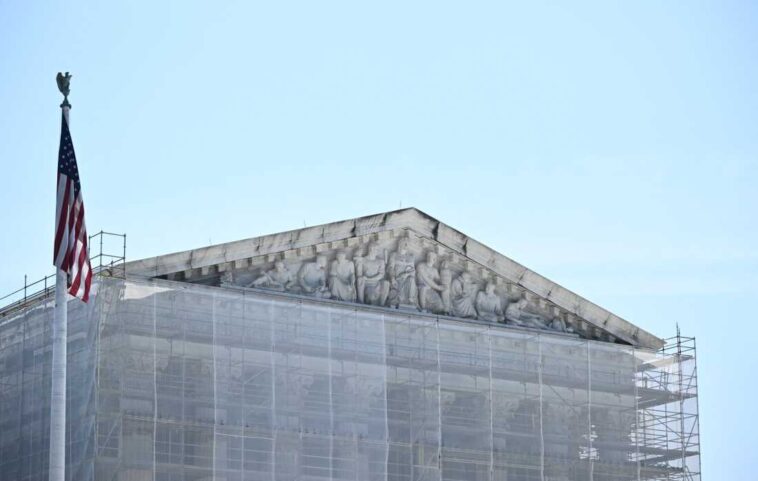
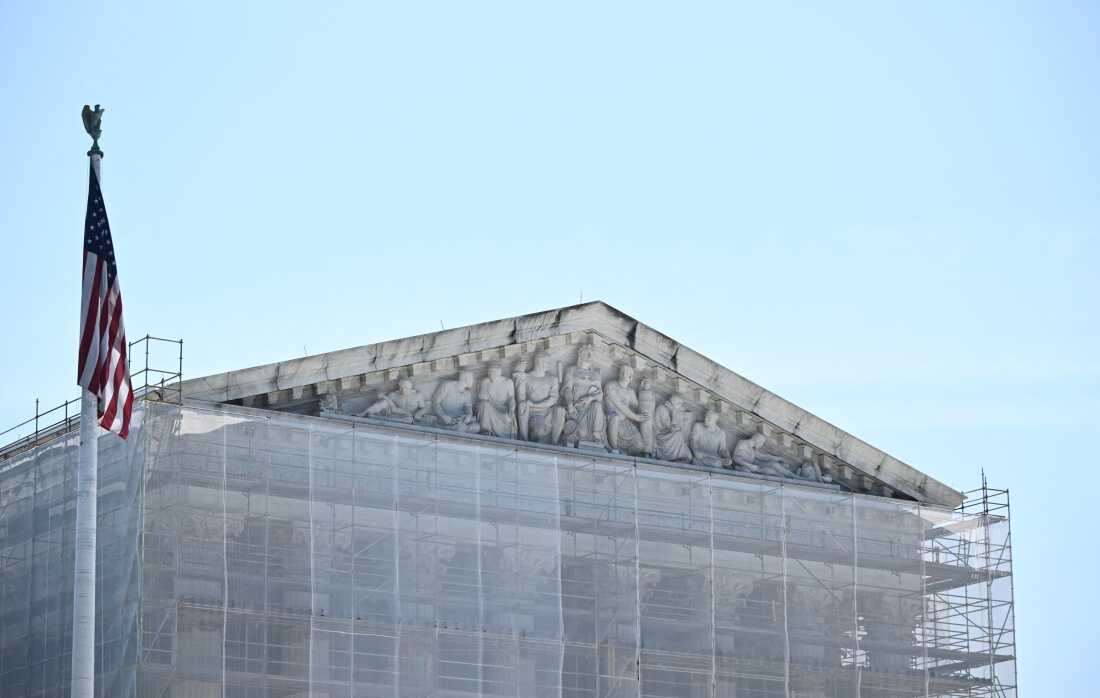
The Supreme Court’s Enduring Summer of Work
The U.S. Supreme Court recently concluded its formal term, but its workload is far from over. Critics and legal scholars alike are watching as the court, even while its justices head off to the beach or embark on summer teaching gigs abroad, remains busy processing a steady stream of emergency appeals. This summer of continuous judicial activity highlights the enduring role of the court in shaping key policies and handling cases that come with tricky parts and tangled issues.
In this opinion editorial, we explore the court’s use of its emergency or “shadow docket,” the implications of recent decisions on executive power and immigration matters, and the broader impact on judicial accountability. We will take a closer look at the court’s evolving methods and the fine points of its reasoning that have left many legal observers both impressed and puzzled.
Unpacking the Shadow Docket: Last-Minute Judicial Decisions
The concept of the shadow docket may seem intimidating to many observers. Traditionally used for last-minute death penalty appeals, it now plays a central role in urgent, high-stakes decisions. When cases are heard via this route, the court often resolves issues without the full briefing or extended oral arguments typical of its standard procedure.
This method of decision-making raises several tangled issues:
- Decisions are issued without fully detailed opinions.
- The reasoning behind rulings is often left unexplained.
- Votes on these rulings may remain anonymous or ambiguous.
- The process provides minimal guidance to lower courts for future cases.
Observers note that while this process enables the court to act swiftly, it also complicates efforts to get into the nitty-gritty of how decisions align with constitutional interpretation and long-standing legal principles. The decisions made on this docket offer the administration a way to secure wins without traditional accountability, leaving many legal experts wondering about the long-term implications for judicial transparency and consistency.
Evaluating the Trump Administration’s Impact on Supreme Court Processes
Since President Trump took office, the Supreme Court’s workload — particularly in matters involving emergency appeals — has dramatically increased. With a busy schedule on the shadow docket, the court has repeatedly supported moves that extend the president’s power. These actions have been especially notable when it comes to separating out issues of executive authority from those matters requiring full judicial scrutiny.
Some of the key aspects include:
- Significant decisions affecting the independence of government agencies and employee protections.
- Swift resolutions on immigration-related appeals, often in cases where immigrants face immediate detention or deportation.
- The controversial use of emergency orders that bypass traditional judicial review.
While these measures have given the administration a short-term advantage, they also raise complex questions about the balance of power between the branches of government. Legal experts warn that the court’s embrace of this streamlined method might be leaving behind some of the subtle details that are critical for long-term accountability and clarity in the law.
Emergency Appeals and the Fine Points of Judicial Accountability
The reliance on the shadow docket by a conservative majority has been described as a significant alteration in how the court dispatches its judicial responsibilities. Essentially, the court is allowing the administration to implement policies that many critics call lawless — without a definitive, fully explained judicial review that resolves the legal debates once and for all.
Several intertwined points characterize this shift:
- The court issues brief, unsigned orders that lack the traditional detailed analysis.
- There is a growing tendency to allow executive orders to proceed unchallenged.
- Lower courts find themselves without the usual detailed guidance on how to handle similar cases.
While such an approach may shield the decision-making process from political pressures, it leaves behind a trail of confusing bits that future judges will have to work through. This raises concerns about whether the court is adequately preparing the legal system to manage policy reversals or challenges when these rushed orders inevitably require more in-depth judicial debate.
Nationwide Injunctions and the Role of Lower Courts
One of the more significant moves made by the court this term was its decision to strip lower courts of the power to issue nationwide injunctions in certain cases. This decision is seen as critical for how policy challenges are addressed, particularly when those policies touch on migration and executive agency independence.
Several key considerations emerge from this ruling:
- Nationwide injunctions were historically used as a key tool for halting executive overreach.
- The removal of this power effectively centralizes control in the hands of the Supreme Court.
- There is an increased risk of lower court judges engaging in judge-shopping, where litigants seek out sympathetic judges in favorable jurisdictions.
The decision introduces a host of fine shades when comparing the powers of different judicial tiers. By changing how injunctions are issued, the Supreme Court has created a more streamlined route for executive decisions, which may limit the checks and balances typically provided by a more robust engagement from lower courts.
Assessing the Shift: Executive Orders and Immigration Policy
The interplay between the executive branch and the judiciary has been under intense scrutiny, particularly in cases that affect immigration. The court’s recent rulings on emergency orders concerning the deportation of immigrants and the lifting of protections for nationals from various countries illustrate this point vividly.
Recent decisions in immigration cases have involved:
- An aggressive step to bar the administration from executing timely deportations without offering an opportunity for a legal challenge.
- Simultaneously, other decisions have permitted the administration to eliminate or modify existing protections for immigrants from countries like Venezuela, Haiti, Cuba, and Nicaragua.
- These divergent outcomes have left community advocates and legal scholars with mixed feelings about the court’s commitment to a consistent judicial standard.
It is the conflicting nature of these decisions — their simultaneous blocking of overly hasty deportations while enabling changes to immigration protections — that has brought forward a number of subtle details warranting closer examination. These decisions highlight the tangled issues that arise when political agendas intersect with the need to adhere to legal procedures and constitutional safeguards.
Comparative Review: Lower Courts Versus Supreme Authority
A fascinating aspect of the current judicial landscape is the apparent difference in approach between the Supreme Court and lower appellate courts, particularly the conservative-leaning courts like the Fifth Circuit. For instance, the Supreme Court has reversed several decisions from these lower courts in some high-profile cases, highlighting that judicial conservatism can manifest differently across the legal hierarchy.
A simple table can help illustrate the contrasts:
| Aspect | Lower Courts Approach | Supreme Court Approach |
|---|---|---|
| Decision Detail | Often provides lengthy opinions with detailed reasoning. | Relies on brief, unsigned orders with minimal explanation. |
| Use of Nationwide Injunctions | Generally more willing to grant injunctions. | Recently restricted this power in favor of centralization. |
| Role in Migration Cases | Exerts a cautious approach to executive orders. | Has sided with the administration on several emergency appeals. |
This table underlines the nuanced differences in judicial approach, suggesting that while both levels of the judiciary share similar ideologies at times, the methods they employ to manage their dockets can be markedly different. These subtle distinctions can have long-lasting impacts on how justice is administered across the country.
Religious Rights and State Intervention in Judicial Decisions
Another area where the court’s decisions have invoked strong reactions is in matters related to religious rights and public education. In one notable case, the court required public schools to provide an opt-out option for lessons that conflict with parental religious beliefs. Meanwhile, in a matter involving Catholic Charities, the court ruled that a state violated constitutional rights by not extending tax exemptions to a Catholic social ministry organization on the same basis as churches.
Key points on these cases include:
- The court’s decisions have provided key protections for religious expression and parental rights in education.
- The outcomes have been presented without extended discussion, leaving lower courts to figure a path forward on how similar disputes should be resolved.
- Both decisions illustrate how the court’s approach to sensitive social issues is subject to both support and criticism from across the political spectrum.
These rulings have been perceived as affirming religious liberty and parental influence in educational content, although they have also drawn criticism for being too abrupt and not fully engaging with the complicated pieces of constitutional law that these issues invariably involve.
Gender-Affirming Care and Judicial Division
On the subject of gender-affirming care for minors, the Supreme Court has taken decisive steps. In a split decision, the court upheld state laws banning such care for minors. This decision has led to concerns that similar restrictive measures could soon affect other areas, such as sports and education, where trans students are involved.
Important aspects of this contentious issue include:
- Approximately half of the states have enacted such bans, reflecting a broad trend toward curtailing access to gender-affirming care.
- The decision has ignited debates over the balance between state authority and individual rights in sensitive social issues.
- The opinion was divided, with liberal justices dissenting, suggesting that the ruling might lead to further legal challenges as states adjust their policies.
While the decision resonates with those who view the measure as a protective stance, it also underscores the nerve-racking challenges of ensuring that legal decisions account for both constitutional principles and the evolving views on personal autonomy. The lack of a unified stance across the bench makes this a litmus test for future cases involving similar topics.
Revisiting the Affordable Care Act and Judicial Reasoning
Another critical area where the Supreme Court’s decisions have left a mark is in the realm of health care law. In a bid to rein in efforts to undermine a major component of the Affordable Care Act, the court reversed several decisions from lower courts that had sought to strip away protections afforded by the statute. This reversal is significant because it represents a pushback against attempts to radically alter established health care policy without congressional authorization.
Key observations include:
- The reversal serves as a reminder that despite the court’s conservative tilt on other matters, there remains a willingness to defend constitutional rights in areas where legislative powers are being overstepped.
- The decision reflects the court’s role in providing a check on policy changes that might otherwise be enacted without proper legal grounding.
- The sparse reasoning accompanying the decision leaves certain subtle details, including the rationale behind judicial restraint versus engagement, up for interpretation.
This example illustrates that even amidst a wave of rapid and sometimes opaque decisions, the court continues to engage with some of the more emotionally charged and significant social and legal issues of our time.
Comparative Judicial Perspectives: Tensions Between Expediency and Explanation
The reliance on the shadow docket for emergency appeals, while efficient, has prompted a broader discussion about the court’s traditional role in delivering thorough opinions. Georgetown University law professor Stephen Vladeck has pointed out that the brief and unsigned orders emerging from the shadow docket leave many legal scholars and practitioners with more questions than answers.
Several points contribute to this broad debate:
- Straightforward decisions may preserve judicial power for future intervention if needed.
- Lack of detailed opinions could hinder the development of a coherent body of case law, making it more challenging for lower courts to steer through future cases.
- The absence of signed opinions means that voters and observers often cannot pinpoint how individual justices align on major decisions.
These conflicting priorities — the need for speed and the desire for detailed, reflective judgments — force both the public and legal experts to figure a path through a judicial landscape filled with off-putting and occasionally intimidating levels of ambiguity. The subtle parts of these decisions, while seemingly minor at first glance, can have far-reaching effects on the clarity and predictability of the law.
Understanding the Role of Judicial Transparency in a Changing Era
In a time when the administration is actively reshaping the executive branch’s role, the need for judicial transparency is more critical than ever. Critics argue that the lack of thorough explanations in many of the court’s emergency orders may temporarily favor one political agenda over the other, ultimately undermining public trust in the judiciary.
Key issues in this debate include:
- The court’s decisions are often devoid of the nitty-gritty discussions that normally accompany higher-court rulings.
- Future litigants may face a nerve-racking task when they try to get into the fine points of how these decisions might apply to their cases.
- The reliance on expedient orders may delay the evolution of a fully reasoned legal framework to address contemporary challenges.
While rapid decision-making can be seen as critical in emergencies, the long-term benefits of judicial transparency — building a body of well-reasoned opinions, even if they come later — may ultimately serve the larger cause of maintaining legal integrity and public confidence in the courts.
The Future of Emergency Appeals and Judicial Workload
The current summer of endless work for the Supreme Court raises important questions about the future of emergency appeals. With the growing number of cases arriving on the shadow docket, many wonder if the court might eventually need to recalibrate its procedures to strike a better balance between expediency and thorough judicial reasoning.
Looking ahead, several possible developments could shape the future of the court’s approach:
- Enhanced Explanation Protocols: The pressure may build for the court to provide more comprehensive summaries even in emergency rulings, ensuring that lower courts can steer through future cases with clearer guidance.
- Increased Oversight and Accountability: As public scrutiny intensifies, there could be new calls for mechanisms to track and publicize the voting alignments on shadow docket decisions.
- Refined Case Selection: The court might adopt stricter criteria for which cases qualify for rapid resolution, thereby reserving its full briefing process for those with truly significant legal impact.
Each of these areas involves complicated pieces of policy and legal philosophy that will make the path forward a challenging one. The balancing act between timely decisions and detailed reasoning is a delicate one, and only time will tell how the court manages these competing demands in a rapidly changing political and judicial climate.
State Challenges and the Ongoing Debate Over Birthright Citizenship
Another contentious area remains the debate over birthright citizenship, which has prompted several class actions challenging executive orders. The Supreme Court’s decision to allow states to seek nationwide remedies for policies like these has been broadly interpreted as both an endorsement of state-level intervention and a subtle acknowledgment of the limits of executive power.
The ongoing debate touches on various tricky parts of constitutional interpretation:
- State Versus Federal Authority: How much power do states have to counteract federal policies without overstepping constitutional boundaries?
- Implications for Minority Rights: The use of state remedies in challenging birthright citizenship policies raises questions about the treatment of immigrant communities and the preservation of their rights.
- Future Legal Battles: As legal challenges continue, the court may be called upon to revisit these issues, creating an even more loaded environment where every decision will have broad ramifications.
This issue is emblematic of the broader tension in American constitutional law — one that pits swift executive action against the enduring need for thorough judicial scrutiny and balanced state intervention.
Reflections on the Court’s Overall Judicial Strategy
Overall, the Supreme Court’s recent term has been characterized by a strategic approach that leans toward efficiency, especially in how it manages emergency appeals. However, this strategy comes with a host of subtle details that leave many legal advocates with mixed feelings. Here are some of the reflections that capture the current sentiment:
- The court’s willingness to allow rapid decisions has been praised for keeping up with a fast-changing national landscape.
- Critics argue that bypassing the full briefing process leaves behind too many confusing bits of legal precedent.
- The ambiguity in many decisions raises concerns about accountability, particularly when the full rationale is not disclosed.
These reflections underscore that while the current judicial strategy might offer short-term relief from bureaucratic delays, it also runs the risk of creating a legal framework that is hard to manage in the long term. In a system already loaded with problems, every decision, no matter how expedient, must eventually stand up to the scrutiny of time, precedent, and evolving political contexts.
Charting a Course Through the Twists and Turns of Modern Jurisprudence
As the Supreme Court’s summer workload continues unabated, it becomes increasingly clear that the challenges facing modern American jurisprudence are both intricate and far-reaching. The court’s decisions on matters ranging from immigration to health care law, from executive orders to religious rights, all contribute to a cumulative legal narrative that is as dynamic as it is contentious.
For legal scholars and practitioners aiming to make their way through this evolving landscape, several critical factors must be kept in mind:
- Constant Vigilance: Remain aware that every decision, no matter how abbreviated, carries implications that span the entire judicial system.
- Understanding Hidden Complexities: Take time to dig into the fine points of each ruling to appreciate the subtle shifts in constitutional interpretation.
- Adaptability: Stay flexible in legal strategies, as both the executive and judicial branches continue to recalibrate their roles in response to shifting political winds.
Charting a course through these twists and turns requires not only a robust understanding of legal principles but also an openness to revisiting established norms. It is in this space of practical legal evolution that the Supreme Court’s actions, though momentarily off-putting, may ultimately foster a richer, more resilient judicial system—if only it chooses to address the confusing bits and tangled issues with full transparency moving forward.
Concluding Thoughts: A Summer of Endless Judicial Work
In summary, the Supreme Court’s current term and its continued engagement with emergency appeals serve as a reminder of the court’s enduring centrality in American governance. Whether in matters of immigration, health care, religious rights, or executive orders, the consistent and sometimes opaque use of the shadow docket highlights both an ability to act swiftly and the inherent challenges of doing so without fully engaging with the subtle details of the law.
While it is clear that the current strategy has granted the administration significant short-term wins, the long-term effects remain as yet undetermined. As both lower courts and legal scholars strive to figure a path through these recent decisions, there is an urgent need for a renewed commitment to detailed judicial explanations and enhanced transparency in the court’s decision-making processes.
Looking forward, a reexamination of the court’s reliance on expedient measures — perhaps through a revised protocol that combines speed with clarity — could help reconcile the demands of modern governance with the traditional values of judicial accountability. For now, however, the court’s endless summer of work stands as a symbol of both progress and unresolved tensions in American law.
Ultimately, the Supreme Court’s role as the final arbiter of important legal and constitutional questions remains unassailable. Yet, as we continue to watch and analyze its decisions, there is a shared hope that future cases will be accompanied by more comprehensive explanations, ensuring that every decision stands as a clear guidepost for the next generation of legal practitioners and the broader public alike.
In a system where the twists and turns of legal interpretation can sometimes seem overwhelming, the need for clarity cannot be overstated. By taking a closer look at every decision and weighing its implications for both the present and future, we gain a better understanding of how the highest court in the land navigates the challenging terrain of modern jurisprudence. This, in turn, may well inform debates on the appropriate balance between expedience and explanation in one of our nation’s most critical institutions.
As we continue to reflect on this summer of unending judicial work, we are reminded that while every ruling may be delivered in a hurried, off-putting fashion, the legacy of these decisions will shape the legal landscape for decades to come. Only through careful analysis and ongoing dialogue can we hope to steer through the nerve-racking challenges that lie ahead, ensuring that justice, while sometimes delivered in brief, ultimately serves its enduring purpose.
Originally Post From https://www.npr.org/2025/06/30/nx-s1-5449087/supreme-court-trump-nationwide-injunctions
Read more about this topic at
The Supreme Court ‘Shadow Docket’
Beware the Supreme Court’s ‘Shadow Docket’