How the Louisiana Supreme Court Decision Could Reshape Alabama’s Congressional Landscape
The recent developments emerging from a Louisiana redistricting case may trigger significant changes not only in that state but also in Alabama—especially concerning its long-standing pattern of racial representation in Congress. As we take a closer look at the court’s approach to Section 2 of the Voting Rights Act, it is important to consider the possible ripple effects that could ultimately leave Alabama with minimal Black Democratic representation. This opinion editorial aims to provide a balanced perspective on the issues at hand while addressing the tangled issues that underscore the current debate.
Examining the Louisiana Case and Its Implications for Voting Rights
The Supreme Court’s almost three-year-old redistricting case from Louisiana is at the heart of this discussion. The case centers on challenges to how congressional maps were drawn, particularly focusing on two majority-Black districts established in Louisiana. The potential ruling could effectively lessen the protective measures of Section 2 of the Voting Rights Act—a provision originally designed to stop election practices that limit the voting strength of racial minorities, including acts of racial gerrymandering.
The court’s recent 2.5-hour hearing in Washington, D.C. highlighted the fine points of legal interpretations and set the stage for future decisions. Both legal experts and political analysts are on edge, considering that the ruling might provide broader leeway for redistricting practices that favor one party, especially in Southern states like Alabama.
Understanding Redistricting Shifts: How Alabama’s Map Could Change
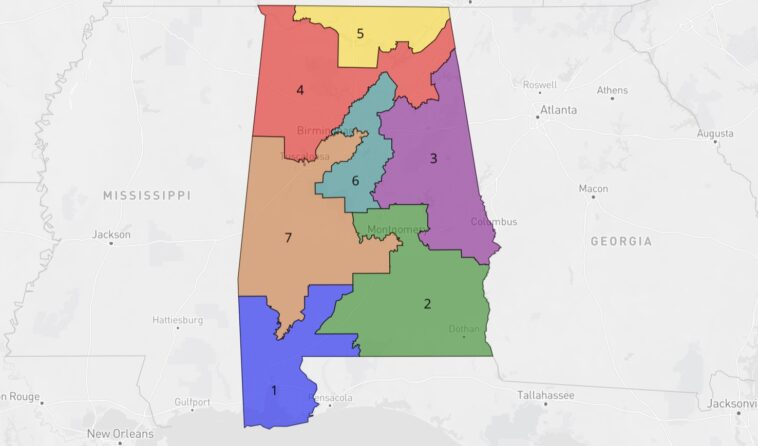
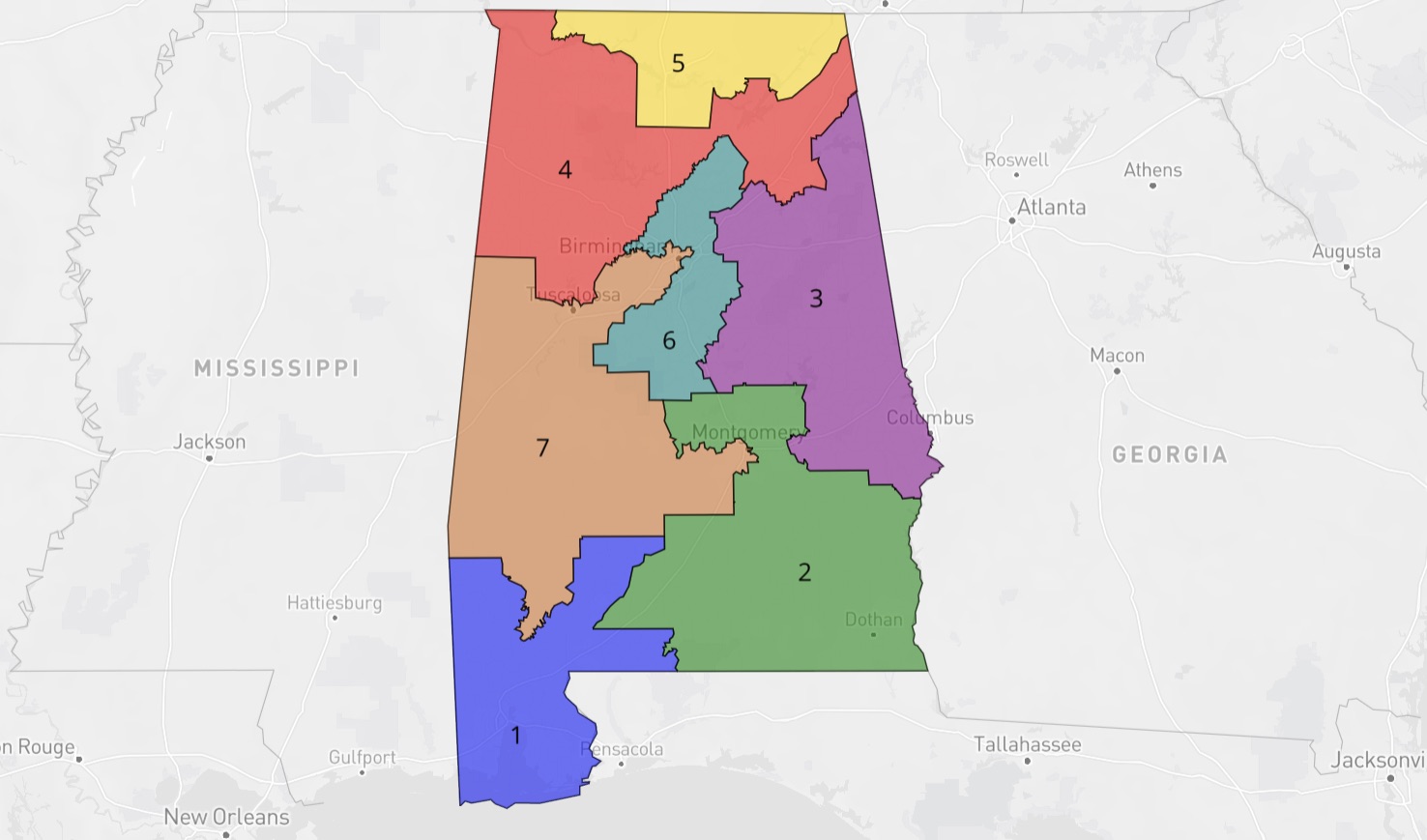
For Alabama, the potential ruling in the Louisiana case poses a direct threat to the state’s congressional districts. Historically, Alabama has seen robust Black representation—an outcome supported by federal interventions when the state’s original congressional maps were judged to be in violation of Section 2 of the Voting Rights Act. Recent redistricting efforts have led to landmark elections—for example, the simultaneous election of two Black U.S. House members, a first in 205 years of state history. This progress, however, may now be at risk.
Political scientists note that if the court’s decision makes it more difficult to prove racial discrimination in redistricting, state lawmakers might redraw the district lines with the objective of engineering outcomes that favor Republicans. Considering the following points can help clarify the situation:
- Historical Precedent: The 2023 Supreme Court ruling on Alabama’s congressional map set a benchmark by acknowledging that the previous configuration diluted the voting power of Black citizens.
- Legal Strategy: The current challenge in Louisiana involves a group of predominantly white voters contesting the creation of majority-Black districts—a strategy that, if successful, might be adopted elsewhere.
- Potential Political Shift: Experts estimate that a change, if implemented appropriately, could shift between 12 and 19 Southern congressional seats from Democratic to Republican hands.
In Alabama, two districts stand out as being particularly vulnerable: the 7th Congressional District and the 2nd Congressional District. These districts have long been seen as spaces where minority voters have had a decisive influence on electoral outcomes—an influence that could be undermined if new maps favor one party exclusively.
Historical Context: The Journey Toward Inclusive Representation
Understanding the current debate requires a look back at Alabama’s political evolution. The creation of Alabama’s first majority-Black congressional district dates back several decades. This milestone was a critical step in ensuring that minority voices were heard in settings that had historically excluded them. Over time, legal battles have shaped the make-up of these districts through various federal interventions designed to protect voting rights.
For example, in a landmark case from the early 1990s, federal judges intervened to redraw the map after findings that the previous configuration had infringed on the community’s right to choose their representatives. This process, while complicated by many tricky parts and tangled issues, was a necessary measure to fortify the rights of minority populations.
A historical timeline of key events is presented in the table below:
| Year | Event | Impact |
|---|---|---|
| 1965 | Voting Rights Act Enacted | Marked a turning point by outlawing voting discrimination. |
| 1980 | Mobile v. Bolden | Set limitations on the application of Section 2, emphasizing intentional discrimination. |
| 1982 | Congressional Amendment to the Voting Rights Act | Clarified that diluting the voting power of minorities could be challenged irrespective of intent. |
| 2023 | Supreme Court Ruling Against Alabama’s Original Map | Led to the redrawing of district lines to more accurately represent minority voters. |
This timeline highlights how legal and political actions have gradually shifted the balance in favor of more equitable representation. However, the current legal environment is now full of problems as new interpretations of the law emerge.
Political Reactions: Lawmakers and Experts Weigh In
Amid these looming legal battles, responses from both political leaders and legal scholars have been varied. Many of those advocating for voting rights, including prominent Black representatives from Alabama, have warned that overturning Section 2 would not only erode protections but would also reverse decades of progress. Their perspective is driven by the belief that dismantling these safeguards would “take us back to a dark time” in the nation’s history.
For instance, Representative Terri Sewell, who has served as a powerful voice in Congress for minority representation, argues that the Voting Rights Act is a super important legislation that must be preserved. She has long championed measures like the John Lewis Voting Rights Act, which aims to restore preclearance requirements once designed to check discriminatory redistricting practices.
On the other side, figures like Alabama Attorney General Steve Marshall have expressed confidence that ending what he sees as race-based redistricting could level the political playing field. Marshall contends that partisan actors might have previously exploited the statutes to achieve political goals, and that a fresh interpretation of Section 2 could help “figure a path” toward a less racially charged redistricting process.
Legal scholars are also weighing in with thoughtful insights on the potential decision. For example, Professor Charles Bullock III from the University of Georgia noted that while Republicans may not openly acknowledge their intentions, the strategy to reshape district boundaries is clear. Likewise, David Wasserman of the Cook Political Report argued that any ruling against Section 2 could substantially bolster Republican gains—though the ultimate impact is too tied up in timing and local electoral dynamics to be calculated with exact precision.
Timing Is Everything: The Election Cycle and Redistricting
The timing of any Supreme Court decision regarding Section 2 is a critical aspect of the debate. With upcoming midterm elections and a series of primary deadlines in both Alabama and Louisiana, the schedule is proving to be somewhat nerve-racking for campaign strategists on both sides of the political spectrum.
Here are some key dates and considerations:
- Alabama’s Candidate-Qualification Deadline: The cutoff to qualify as a major party candidate for the May 19, 2026, primary is January 23, 2026.
- Louisiana’s Legislative Adjustments: In response to these legal challenges, Louisiana Governor Jeff Landry has convened a special session aimed at rethinking election-related deadlines in anticipation of the court’s ruling.
- Possible Court Decision Timeline: Some national reports suggest that a decision could come as early as January 2026, while others estimate the ruling might not be issued until the summer of 2026.
The overlap of these deadlines with the court’s decision introduces a host of tricky parts when it comes to political strategy. Many analysts predict that while immediate redistricting changes may not drastically reshape the 2026 midterms, the long-term implications could be even more significant, potentially swinging the House in favor of Republicans by the 2028 elections.
Legal Interpretations: The Fine Points of Section 2 of the Voting Rights Act
The legal debate over Section 2 of the Voting Rights Act is at the center of this controversy, pitting traditional interpretations against evolving judicial philosophies. The current case urges the Court to shift its focus towards demonstrating that voting behavior differences stem directly from race—disentangled from political affiliation. This narrow interpretation could severely undermine previous protections aimed at countering racial gerrymandering.
Let’s break down the key legal arguments:
- The Original Intent of Section 2: Designed to protect minorities from voting discrimination by outlawing practices that dilute voting power, regardless of whether such practices were intentional or accidental.
- Current Legal Strategy: The U.S. Justice Department asserts that to win a claim under Section 2, plaintiffs must now prove that race was the primary factor influencing how people cast their ballots. Critics argue that this approach dismisses the subtle parts of historical discrimination.
- Potential Consequences: If the court accepts this reframed standard, state legislatures might be given free rein to redraw districts without adequately accounting for prevailing racial disparities.
Legal experts warn that such a shift could leave minority communities more vulnerable to political manipulation. The decision could also set a precedent that affects the “nitty-gritty” of election law interpretation across the nation.
Challenges and Opportunities in a Tense Legal Environment
The potential weakening of Section 2 is not without its challenges, and its effects might be felt far beyond the immediate redistricting battles. This new legal environment is full of problems—not only for minority voters seeking equitable representation but also for lawmakers who must now take the wheel in ensuring fair districts under a revised legal framework.
Here are some of the challenges and potential opportunities detailed in a bulleted list:
- Challenges:
- Redrawing district boundaries in a manner that continues to respect the voting power of minority communities.
- Dealing with increased litigation as both political parties attempt to maneuver through the revised legal standards.
- Preventing further erosion of public trust in institutions already seen as politically loaded.
- Opportunities:
- Reassessing and reinforcing the systems that ensure minority rights are protected during redistricting.
- Engaging in bipartisan dialogues to find a middle ground in redistricting practices that address both political fairness and historical inequities.
- Leveraging federal oversight to create district maps that truly reflect the diverse makeup of states like Alabama.
This list highlights how, amid the tension and tricky parts of legal maneuvering, there remains a significant chance to reshape the electoral landscape for the benefit of all voters. The debate is not merely about partisan advantage—it is about the broader principles of democratic representation.
Political Perspectives: A Balancing Act Between Parties
The intersection of law and politics in this redistricting debate creates a situation that is both complex and politically charged. In Alabama, where race has long been a deciding factor in elections, these developments are particularly loaded with issues. On one side, Democratic leaders emphasize that minority representation is essential to maintaining progress in civil rights, citing historical victories that have elevated Black voices in the state’s political narrative.
Meanwhile, Republican leaders, including high-profile figures in the Alabama Republican Party, argue that ending race-based mapping is key to ensuring that districts are drawn based solely on political affiliation rather than race. They contend that a clear separation between racial considerations and electoral outcomes is necessary to prevent electoral favoritism and to “find your way” toward a more balanced political environment.
Prominent voices on both sides acknowledge that the upcoming legal interpretation and any subsequent redistricting efforts will have a super important effect on future elections. With Alabama’s population being roughly 74 percent white and the remaining quarter comprised primarily of Black residents, any change to the district lines can have deep and lasting effects on the distribution of political power.
Below is a brief comparison of the differing viewpoints:
| Perspective | Key Arguments |
|---|---|
| Democratic Viewpoint |
|
| Republican Viewpoint |
|
The table above encapsulates the heated debate, where both sides present arguments full of issues and slight differences that complicate the overall picture. Despite the polarized opinions, many analysts agree that any ruling that shifts the current balance will have profound implications for the American political system.
Reassessing the Public Trust in Judicial and Political Institutions
The potential judicial redefinition of Section 2 has broader consequences for public confidence in both the legal system and elected officials. Recent Gallup polling indicates that while a slim majority still approves of the Supreme Court’s performance, trust in the institution has been declining. Critics argue that any decision seen as overly politically motivated may further erode this fragile trust.
One viewpoint, expressed by legal commentators, points out that if voters start perceiving redistricting as purely a tool for partisan gain, it could lead to a long-term decline in voter engagement. Susan Pace Hamill, a professor emeritus of law, has warned that stripping away protections might not only change the map—it could also “steer through” a broader crisis of confidence in the judiciary. This concern grows in an environment where political turmoil and legal reconfigurations overlap.
Efforts are now underway by various stakeholders to communicate the minute yet critical details of these evolving legal interpretations. Both Democratic and Republican lawmakers in Alabama are watching the Supreme Court case closely, preparing for changes that could affect everything from primary elections to overall representation in Washington, D.C.
Looking Ahead: What Can Voters Expect?
As legal battles continue to unfold, voters in Alabama and other Southern states are being urged to keep informed about the developments. The upcoming midterms, potentially reshaped by any Supreme Court decision on Section 2, may not see wholesale changes in congressional representation immediately. However, the longer-term implications could be substantial—especially if the court rules in favor of redistricting practices that downplay racial considerations.
Some key points to anticipate in the near future include:
- Potential Shifts in Congressional Seats: Should the court’s decision make it harder to prove racial discrimination in redistricting, several Southern districts previously leaning Democratic might flip Republican in subsequent elections.
- Legal Reforms at the State Level: States like Alabama might face pressure to redraw their maps more aggressively, potentially leading to districts that solidify the current partisan advantage.
- Increased Litigation: With the stakes so high, more legal challenges are expected as both parties vie to protect their electoral interests.
Voters are encouraged to remain vigilant and to engage with local representatives to ensure that any new district maps truly reflect the community’s will. Transparency in the redistricting process, along with ongoing public discourse, is key to maintaining a democratic system that values equity and fairness in representation.
Conclusion: Charting a Path Forward in Uncertain Times
The potential overturning or significant weakening of Section 2 of the Voting Rights Act is a turning point laden with complicated pieces and challenging twists and turns. Alabama’s congressional map, which has allowed for meaningful Black representation for decades, now faces an uncertain future should the Supreme Court favor the reinterpretation advanced in the Louisiana case.
On one hand, many see the potential decision as paving the way for a more politically neutral redistricting process—one that might eventually allow both sides to compete on a level playing field, free from race-based considerations. On the other hand, the risk that minority voters could be sidelined remains a very real concern among civil rights advocates and Black community leaders.
In the end, this situation underscores the importance of staying both informed and active in political discourse. Redistricting is not merely an administrative task—it is a powerful tool that shapes the political landscape and holds the potential to redefine representation for years to come. As lawmakers, legal experts, and community members continue to sort out the many layers of this debate, the main takeaway is clear: preserving fair and inclusive representation must be a super important goal for any democratic society.
While the coming months promise to be filled with legal battles, political debates, and nerve-racking deadlines, it is essential for all citizens to engage with the processes that underpin their representation in government. Whether through outreach, public comment during redistricting sessions, or active participation in local elections, every voice matters in ensuring that the rights and interests of all communities are respected and upheld.
Regardless of the outcome in the Louisiana case, one thing is certain—the future of Alabama’s congressional districts, and by extension its political representation, depends on how adeptly we as a society can tackle the challenging parts of redistricting, the tangled issues of legal interpretation, and the overlapping nuances of political representation. It is our duty to “get into” these discussions, ensure that historical gains are not undone, and work toward a future where every vote truly counts.
Originally Post From https://www.al.com/news/2025/10/how-a-louisiana-supreme-court-case-could-erase-alabamas-only-2-black-districts.html
Read more about this topic at
Louisiana mayor says Supreme Court case threatens Black …
Supreme Court case could lead to loss of Black …