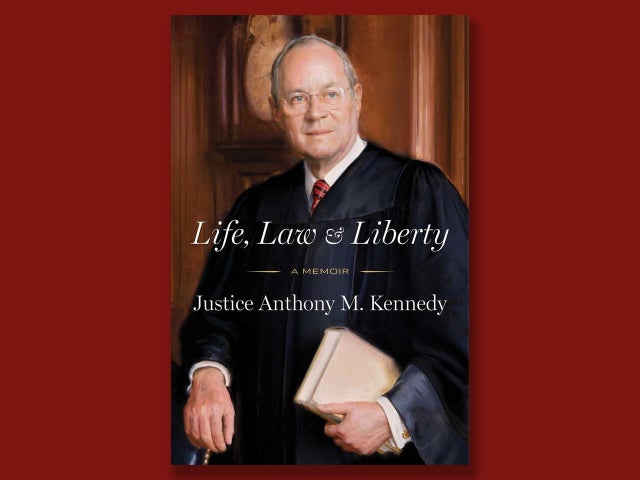
Inside Justice Kennedy’s Memoir: A Revealing Look at a Legacy of Major Legal Decisions
The release of former Supreme Court Justice Anthony Kennedy’s memoir presents readers with a surprisingly candid narrative of his time on the bench, as well as insights into the personal experiences and internal conflicts that shaped a monumental legal career. Spanning decades of judicial service, the memoir offers a closer look into tricky parts of landmark cases, his evolving approach to constitutional interpretation, and his reflections on the shifting atmosphere in today’s political and legal environment.
In a conversation that felt both personal and reflective, Kennedy delves into memories of the esteemed institution and its personalities in an era loaded with tension. His narrative is more than just a telling of events; it takes a closer look into the hidden complexities of courtroom decisions, personal relationships, and the moral weight of each opinion penned along controversial lines. With a style that balances thoughtful reflection with sober commentary, the memoir stands as an essential read for anyone looking to figure a path through the multifaceted world of American jurisprudence.
Revisiting Landmark Cases: The Story Behind Same-Sex Marriage and More
One of the most talked-about chapters in Kennedy’s career is his role in decisions that reshaped civil rights in America, especially his pivotal opinion regarding same-sex marriage. Often remembered as the swing vote in contentious cases, the justice’s decision in favor of marriage equality is a testament to his ability to get into the nitty-gritty of conflicting legal trends and social demands.
Throughout the memoir, Kennedy recounts how the decision came to be, carefully highlighting the emotional and legal nuances that influenced his thinking. In one memorable passage, he reads from his opinion that stated, “No union is more profound than marriage, for it embodies the highest ideals of love, fidelity, devotion, sacrifice, and family.” These words, steeped in both legal rhetoric and personal conviction, capture the essence of how courtroom decisions impact the lives of millions.
For Kennedy, the ruling was not just about legal formalities. He recalls that one of the most persuasive elements in his case was the reality that hundreds of thousands of children of gay parents were being negatively affected under the old legal structure. Kennedy explains that the law’s failure to acknowledge both parents placed families in a position where one parent was legally marginalized—a situation that was both intimidating and off-putting in its disregard for the welfare of children.
This reflection invites readers to take a closer look at how major legal decisions do more than interpret texts; they mold the social fabric of the nation, inviting a re-assessment of how laws adapt to the changing visions of justice and equality.
Understanding the Shifting Tides: Political Turbulence and the Court’s Role
The memoir is set against a backdrop of contemporary political turmoil—a time when familiar routines of public discourse have been replaced by antagonistic conversation and tense debates. Kennedy expresses concern that we may be living in a period where thoughtful and respectful discourse is giving way to more nerve-racking and confrontational exchanges.
During a conversation with NPR’s Nina Totenberg, Kennedy noted, “My concern is that we live in an era where reasoned, thoughtful, rational, respectful discourse has been replaced by antagonistic confrontational conversation. I’m very worried about it. Democracy is not guaranteed to survive.” This observation is not merely a passing comment but a call to recognize the importance of balanced debate within every branch of government—including the judiciary.
Within the memoir, Kennedy uses his years on the court as a lens through which to examine the evolution of public trust and legal accountability. The political landscape, he argues, has become tangled with issues that are far beyond the simple interpretation of statutes or legal precedent. Instead, these issues now represent a broader debate about the core elements of democracy in an age where public opinion often leaves little room for calm, deliberate discussion.
Shifting Judicial Philosophy: Originalism Versus Evolving Interpretations
A recurring theme in Kennedy’s writings is the distinction between originalism—the belief that the Constitution should be understood in its original context—and a more adaptive interpretation that takes into account evolving societal values. Kennedy contrasts his own legal philosophy with that of prominent originalists, underscoring that the Constitution was written in language that left room for growth and change.
For example, in his communications about the same-sex marriage decision, Kennedy emphasizes the belief that “liberty must be understood over time.” He argues that the language of the Constitution is imbued with small distinctions and subtle details which, when interpreted through the lens of changing societal norms, unlock new rights for future generations.
This perspective stands in stark contrast to the strict originalist view that has become prevalent in many corners of the court today. While certain members insist on interpreting the Constitution by finding their way back to the meanings understood at the time of its ratification, Kennedy believes that doing so would ignore the intricate layers of living democracy. His memoir invites readers and legal enthusiasts alike to take a closer look at the fine points in debates that continue to define the role of the judiciary in modern America.
Below is a summary of the key differences between these two judicial approaches:
| Aspect | Originalism | Adaptive Interpretation |
|---|---|---|
| Constitutional Language | Fixed meaning from the time of ratification | Open to evolving over time |
| Judicial Role | Limited, deferring to historical context | Active in applying contemporary values |
| Decision Making | Reliant on strict textual analysis | Considering societal changes and outcomes |
| Impact on Civil Rights | Potentially limiting growth | Facilitating expanded rights |
This table captures some of the subtle differences that Kennedy believed were super important to consider when making tough legal calls. His memoir is a repository of such reflections, making it clear that understanding these differences is critical in appreciating the role of the judiciary in a vibrant democracy.
The Personal Toll: Friendships, Apologies, and the Human Side of the Bench
No memoir about life on the Supreme Court would be complete without a look into the personal relationships that played out behind closed doors. Kennedy’s account of his interactions with Justice Antonin Scalia stands out as both touching and instructive. Once noted for his unwavering legal opinions, Scalia became a figure whose personal rapport with Kennedy was marred by ideological differences that spilled over into personal space.
During one poignant moment, Kennedy recalls an incident where Scalia, after expressing his discontent through a curt and critical dissent, eventually sought to mend their personal divide. Kennedy recounts:
- Scalia admitted that his language in the dissent was intemperate and wrong.
- He expressed a sincere apology, emphasizing that the value of their friendship was more important than the legal differences between them.
- Their exchange, though marked by restraint rather than overt displays of affection, manifested in a meaningful embrace that symbolized reconciliation.
This episode is emblematic of the tangled issues that arise when professional passion and personal relationships collide in a tense, ever-evolving environment. Kennedy’s narrative suggests that while legal battles may be nerve-racking and politically charged, at the center of these disputes are human beings with their own internal battles, personal values, and the need for compassionate understanding.
Moreover, this story serves as a reminder that in times when the environment around us is rapidly changing, renewing and nurturing personal bonds is not just a nice gesture but a necessity. Without these relational anchors, the heavy weight of legal and political decisions could become even more overwhelming and isolating.
Addressing the Current Climate: Judicial Discourse in an Age of Partisan Politics
In recent years, the judicial arena has become a microcosm of the larger political battleground—a place where every decision is scrutinized not just for its legal merit but for its perceived political allegiance. Kennedy’s memoir, written in the wake of turbulent political events, reflects on how partisanship has seeped into even the most respected institutions.
During a particularly charged period when public figures were facing consequences for controversial actions, from television hosts to high-ranking prosecutors, Kennedy’s measured voice stood out. He pointed to the erosion of rational debate, emphasizing that the court must work through its own internal divisions while maintaining respect for opposing views.
His worries resonate across a broad spectrum of people: those who see the court as a guardian of balanced justice and those who view it as a battleground for ideological supremacy. The memoir offers an insider’s perspective on how a once revered institution can be transformed by the constant push and pull of political agendas.
This issue is multi-layered, involving both political and legal reasoning. Some of the key challenges include:
- The growing tendency of judicial opinions to adopt language that inflames rather than calms disputes.
- The pressure on justices to align their rulings with the expectations of politically active groups.
- The risk that over time, the court’s reputation as an impartial interpreter of the law might be undermined.
Through his reflective prose, Kennedy reminds readers that the primary duty of judicial custodians is to safeguard the rule of law, not to merely echo the prevailing political winds. In doing so, he calls upon current and future justices to think twice before allowing the charged atmosphere of partisan politics to dictate the finer points in legal decisions.
Finding Your Way Through Judicial Tensions: Renewing Friendships and Building Consensus
The memoir not only dives into the professional and political dilemmas faced by justices on the bench but also highlights the everyday, human struggles of sustaining meaningful friendships and professional alliances. Kennedy, who has long been seen as a mediator in contentious legal disputes, offers an intimate look at how friendships among justices can falter under the weight of intense public and internal scrutiny.
The account of his final conversation with Justice Scalia powerfully illustrates that even at the very highest levels of legal debate, human connections remain a crucial element. When Scalia approached Kennedy to apologize for his previous vehement dissent, it underscored the fact that behind every legal opinion lies a personal story—a story where empathetic understanding and genuine warmth can prevail over even the most challenging of disagreements.
For readers and legal observers alike, this narrative serves as a reminder of several important points:
- It is essential to nurture relationships, as they offer stability during periods full of problems and ideological conflict.
- Reconciliation after disagreements can strengthen a professional community, reinforcing the idea that personal bonds are as influential as legal interpretations.
- Finding your path in a politically charged environment often requires a balance between strong personal principles and the flexibility to accept differing viewpoints.
Kennedy’s memoir invites us to consider that the inner workings of the Supreme Court are replete with difficult decisions and interpersonal nuances that often go unnoticed by the public. Rather than simply focusing on the outcomes of landmark cases, it encourages an appreciation for the intricate, sometimes complicated pieces of honest dialogue, mutual apology, and reaffirmed friendships.
Evaluating the Judicial Impact: The Broader Legal and Social Implications
As readers take a closer look into the memoir, they are compelled to consider the broader impact of Kennedy’s decisions—not just on legal precedent, but on society as a whole. His opinions, especially on matters like same-sex marriage and abortion rights, continue to shape debates around fundamental freedoms in the United States.
Kennedy’s reflections reveal that legal decisions are rarely isolated events. Rather, they are intertwined with broader narratives of social change. Decisions made on the bench often prompt a reexamination of societal values, challenging both citizens and lawmakers to understand that legal reform is a continual process influenced by the tricky parts of public sentiment and ethical debates.
The memoir breaks down several areas where his judicial contributions have had a lasting influence, including:
- Family Law and Child Welfare: Kennedy illustrates how legal exclusions could affect everyday families, particularly children raised by gay parents. His advocacy in these areas not only touched on constitutional rights but also practical aspects of family health and welfare.
- Civil Rights and Equality: By affirming the legal recognition of same-sex marriage, Kennedy helped lay the groundwork for a more inclusive society, one where equality before the law became more than just an ideal but a practical reality for many.
- Judicial Reasoning and Public Trust: His approach to interpreting the Constitution pushed the envelope on traditional legal doctrines, contending that statutes should serve the people by evolving with societal expectations rather than being shackled by historical interpretations.
Each of these points highlights a key takeaway from Kennedy’s career: that the decisions made in the hallowed halls of justice have tangible impacts on everyday lives. Rather than dealing solely with abstract legal texts, the court’s opinions serve as building blocks for a society that continues to negotiate the fine shades between fixed legal doctrine and the messy reality of modern life.
Balancing Legal Doctrine with Modern Realities: A Call for Judicial Empathy
One of the recurring themes that stands out in Kennedy’s reflection is the necessity for empathy within judicial decision-making. His memoir underscores that justice is not only about applying the law in a vacuum—detached and cold—but also about understanding the broader human consequences of courtroom rulings.
This understanding is particularly apparent in his detailed recounting of the same-sex marriage case, where he measured the impact of legal exclusion on families and children in a way that was both personal and striking. By citing the struggles faced by children who were forced to live with the limitations imposed by traditional legal interpretations, Kennedy makes a compelling case for the need to reconsider how the law treats marginalized groups.
According to Kennedy, legal opinions should be able to steer through both historical context and modern-day challenges, blending established interpretations with the shifting sands of current life. He argues that the Constitution was meant to be a living document—one that always bears relevance as society learns new twists and turns about freedom and fairness.
Key points in his argument for a more empathetic judicial approach include:
- Recognition of Social Change: Laws must be interpreted in a way that resonates with current social realities rather than being limited by outdated practices.
- The Impact on Everyday Lives: Every ruling should consider its practical effects on individuals, families, and communities.
- Moving Beyond Partisan Lines: Judges should resist the pressure of current political divides in favor of decisions that reinforce the principles of fairness and equality.
This idea is not new to legal scholars, yet Kennedy’s candid portrayal of his internal conflicts and his resolute belief in adaptability offers a fresh perspective. His memoir challenges readers to acknowledge that the legal system must reconcile its storied history with the demands of a dynamic, ever-changing society.
Lessons for Future Generations: Reinforcing the Role of the Judiciary in Sustaining Democracy
As the memoir draws to a close, it leaves readers with several important reflections on the future of the judiciary and its role in safeguarding democracy. Kennedy’s hope for future generations of justices is that they will embrace both the weight of historical precedent and the need to adapt to modern challenges.
The legacy he leaves behind is multifaceted. On one hand, his decisions on landmark cases have fundamentally altered the legal landscape. On the other, his introspective commentary on his own experiences offers a blueprint for balancing firm legal reasoning with a compassionate understanding of human issues.
In the current era, where political partisanship often colors public opinion of judicial decisions, Kennedy’s memoir is a call for measured, respectful dialogue within the judicial system. Key takeaways for future legal minds include:
- Always balance strict legal reasoning with an awareness of the practical impact of your opinions.
- Maintain strong personal relationships as an essential support system to weather politically charged debates.
- Embrace an interpretation of the law that is flexible enough to adapt to new information and social changes.
This reflective stance is super important for nurturing a judicial system that not only upholds the rule of law but also grows with the society it serves. Kennedy’s work underscores that when it comes to the law, history and modern life are in a constant dance—a dance that requires both careful steps and bold moves.
Practical Implications for Legal Professionals: Strategies to Figure a Path Through Judicial Challenges
For those of us working within legal and policy frameworks, Kennedy’s revelations are more than just historical insights—they are practical strategies that can be applied to current and future challenges. The memoir encourages legal professionals to consider the following approaches when faced with tricky parts of legal dilemmas:
-
Critical Self-Reflection: Just as Kennedy looked back on his own decisions and acknowledged their impact, modern legal professionals should take time to assess their own judicial judgments. Ask yourself:
- Are my rulings shaped by a balanced assessment of historical context and modern realities?
- Do I allow personal biases to overshadow the core principles of justice?
- Am I prepared to reassess positions when presented with compelling new evidence?
-
Encouraging Open Dialogue: Kennedy’s experiences reveal that open, respectful conversation—even in the midst of deep disagreements—can lead to meaningful reconciliation. In practice, this means:
- Creating spaces where colleagues can share differing views without fear of retribution.
- Recognizing the importance of interpersonal relationships in maintaining morale and intellectual integrity.
- Promoting an environment where apologizing for past missteps is seen as a strength rather than a weakness.
-
Balancing Tradition with Tomorrow’s Demands: As legal frameworks continue to be tested by evolving societal norms, professionals should:
- Stay abreast of both historical legal texts and current social trends.
- Dedicate time to studying how legal interpretations have changed over the years.
- Develop frameworks that accommodate both established doctrine and modern concerns.
Employing these strategies not only helps in making well-reasoned decisions in the present but also contributes to shaping the legacy of the judiciary for future generations. Kennedy’s memoir serves as a guidepost in this endeavor—an invitation to think deeply about the fine points of legal theory, while never losing sight of the human lives affected by these decisions.
Looking Ahead: Building a More Inclusive and Responsive Judicial Future
The reflections contained in Justice Kennedy’s memoir are especially pertinent as the nation stands at a crossroads where legal ideologies are more contentious than ever. The ideas presented call for the transformation of a system that is sometimes seen as rigid into one that is open to the small distinctions that define real-life problems and the human condition.
In a time when many experience the overwhelming pull of partisan politics, Kennedy’s work is a reminder that the judiciary must remain a bastion of fairness—free from purely political influence, yet fully aware of the social landscape it helps to shape. The future of the court, he suggests, depends on its ability to:
- Reinvent its methods to better reflect changes in societal values.
- Embrace flexibility in interpretation without discarding the foundational principles of the Constitution.
- Create a forum where all voices, regardless of political alignment, can be heard in a respectful and thoughtful manner.
The memoir invites legal professionals, scholars, and the broader public to digest its contents carefully. By doing so, we can all contribute to building a more inclusive legal culture—one that not only recounts historical triumphs but also addresses the challenging bits of modern governance with clarity and conviction.
This blueprint for a responsive judicial future is not an isolated idea but one that resonates with a generation of legal thinkers who see the current state of affairs as an opportunity to reimagine the role of law in society. In embracing this vision, the judiciary can continue to serve as the guardian of democracy, ensuring that every decision is informed by both tradition and the pressing needs of a changing world.
Final Thoughts: Embracing the Messiness of Legal History and Modern Debate
Justice Kennedy’s memoir is a reminder that history is filled with complicated pieces—each decision and relationship on the Supreme Court contributing to a mosaic of legal evolution. As we figure a path through the many twists and turns of judicial history, it is essential to acknowledge that the mechanisms of justice are not always neat; they are deeply human, replete with small distinctions, personal regrets, and moments of profound reconciliation.
This memoir, with its detailed recounting of landmark opinions and personal interactions, challenges courts and citizens alike to look beyond the surface. The human stories behind the decisions—the apologies, the heartfelt debates, and even the lingering tensions—are what truly define the spirit of American jurisprudence.
In closing, Kennedy’s candid account underlines the need for everyone engaged in the legal sphere to renew their commitments to thoughtful and respectful dialogue. It stands as a call to all who work with or rely on the law to make your way through the overwhelming parts of modern political dynamics without losing sight of the high ideals that frame the rule of law.
By embracing both the straightforward and the nerve-racking aspects of judicial decisions, we can better appreciate the balancing act that has shaped our country’s legal landscape. Kennedy’s reflections serve not only as a historical record but also as a beacon for the future—an essential reminder that justice is a living process, continuously refined through the fine shades of human experience and the bold reinterpretation of cherished ideals.
For law professionals, scholars, and citizens alike, this memoir offers numerous lessons—about friendship, legal restraint, and the ever-important dialogue between tradition and modernity. It encourages all of us to dig into the subtle parts of our legal system, to appreciate the responsibility carried by those who interpret our Constitution, and to ensure that the future of our judiciary remains as inclusive and forward-thinking as the values it is meant to protect.
Key Takeaways for a Balanced Judiciary
To summarize the insights from Kennedy’s memoir, consider the following key takeaways:
- Judicial Flexibility: A willingness to adapt interpretations of the law is crucial in ensuring that legal decisions remain relevant over time.
- Empathy in Adjudication: Recognizing the practical impact on everyday lives and family dynamics is a responsibility that every legal opinion should bear in mind.
- Humanizing the Courtroom: Personal relationships and genuine apologies, as highlighted in his reconciliation with Justice Scalia, underscore the importance of maintaining a humane approach within a system often seen as rigid.
- Balancing Tradition with Change: Upholding historical principles while also embracing new social values helps strengthen both the law and the society it serves.
These takeaways are not simply academic—they are a heartfelt appeal for the legal community to find its way through a landscape full of problems and heated debates while remaining rooted in respect, empathy, and a commitment to justice. In doing so, the judiciary can continue to be a cornerstone of American democracy, capable of weathering the toughest challenges with thoughtfulness and resolve.
Conclusion: A Call to Reflect and Act
In a time when the court is as much a stage for political theater as it is a forum for legal reasoning, Justice Kennedy’s memoir stands as a potent reminder of the importance of reflection and action. His detailed accounts of contentious legal battles, the personal impact of landmark decisions, and the enduring value of genuine friendship create a narrative that is both inspiring and instructional.
For those who seek to understand the legal system—not merely as a series of judicial rulings but as a living, breathing mechanism of human interaction and democratic evolution—this memoir offers a wealth of insights. It challenges each reader to consider how we can continue to nurture a legal framework that is both respectful of its storied past and responsive to the ever-shifting social landscape.
As legal professionals, policymakers, and citizens, it is super important to remain vigilant in our pursuit of justice. We must strive to figure a path that honors the legacy of those who have come before us while remaining open to the new challenges of today. Ultimately, the legacy of Justice Kennedy’s tenure should inspire all of us to renew our commitments to balanced, empathetic, and forward-thinking judicial practices.
In reflecting on the memoir, one comes away with the clear message that while the path of justice is often complicated and filled with both nerve-racking challenges and personal sacrifices, it is also a path defined by its capacity to evolve, redeem, and ultimately, to bind a nation together through the shared goal of fairness and equality.
By taking a closer look at Kennedy’s journey and the lessons he imparts, we are reminded of the need to steer through both the obvious and subtle twists of legal interpretation with measured thought, empathy, and the willingness to adapt. And in this way, the memoir not only chronicles the past but also lights a beacon for the future—a future where the rule of law is preserved, enriched by ongoing dialogue, and safeguarded by minds that are prepared to rethink, renew, and rebuild the foundations of our democracy.
Originally Post From https://www.publicradiotulsa.org/2025-10-13/former-supreme-court-justice-kennedys-new-memoir-is-unusually-revealing
Read more about this topic at
A Drink at the Bar: A Memoir of Crime, Justice …
SCOTUS Hit by Leak of Justice’s ‘Champagne for Rulings …