California’s Redistricting: A Strategic Move in a Tangled Political Landscape
The current debate over California’s redistricting efforts is emblematic of a state-wide and national power struggle, filled with tricky parts and hidden complexities. As Democrats propose a bold plan to reshape congressional districts, the conversation has become a maze of political strategy, judicial decisions, and voter rights concerns. This opinion editorial takes a closer look at the new proposal, evaluates the California Supreme Court’s decision, and considers the broader implications of these moves amid an already contentious political environment.
Analyzing the New Congressional Map Proposal
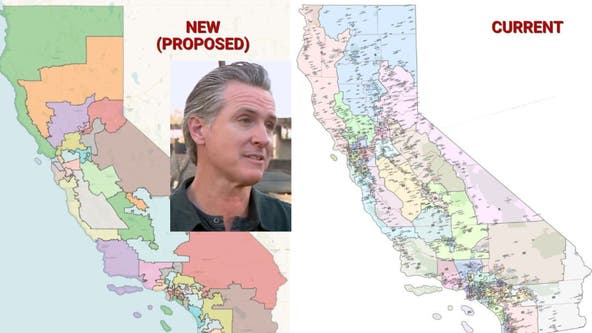
The proposed redistricting plan aims to adjust California’s U.S. House maps in a way that could boost Democratic representation from 43 to 48 out of 52 seats. According to insiders, the plan is designed to reduce five GOP-held seats while bolstering competitive districts in areas such as Orange County, San Diego County, and the Central Valley. This shift is meant to counter similar efforts by Texas Republicans, whose redistricting strategies have raised alarm in political circles across the nation.
By reconfiguring the districts, Democrats hope to create a more favorable electoral environment—a move that is being promoted as an effort to secure fair representation in light of the challenges posed by a partisan opponent. However, the changes come with their own set of tricky parts: politicians must obtain approval from both lawmakers and voters. Years ago, the redistricting power was handed over to an independent citizens commission, so overcoming public apprehension and institutional skepticism represents a nerve-racking challenge for the movement.
California Supreme Court’s Decision: A Key Moment in the Redistricting Battle
In a recent judicial ruling, the California Supreme Court denied a bid by Republican lawmakers to intervene in the redistricting process. The GOP petition sought to halt the legislative process that would allow Governor Newsom’s plan to alter the established voter-created map. While the court’s decision was handed down without a detailed explanation, it has generated significant controversy.
Republicans have decried the move as a dangerous power grab—accusing Governor Newsom and his allies of undermining the principles behind the independent redistricting commission. GOP legislators have vowed to continue challenging the plan both in the courts and on the ballot, arguing that the proposed maps, along with their associated costs (reportedly over $200 million), shift decision-making away from the electorate and into secretive negotiations among politicians.
Key Arguments Raised by the Opponents
- Loss of voter input: Critics point out that the new plan tightly limits public participation in shaping district maps.
- Cost concerns: The staggering price tag attached to the process is viewed as a burdensome expense for taxpayers.
- Shift in power dynamics: There is growing unease that such changes concentrate power in the hands of a few influential figures, rather than in the hands of the voters.
These points are instrumental in understanding why the state’s redistricting efforts have become so loaded with issues and are now at the center of national debates about transparency and democratic legitimacy in electoral processes.
The Influence of Texas Redistricting on California’s Strategy
One of the unique facets of the debate is how political maneuvers in Texas are impacting the discussion in California. In Texas, Republican interests have pushed for new district maps aimed at bolstering their representation in Congress. In response, California Democrats see their redistricting efforts not only as a means of gaining a legislative advantage but also as a direct counteraction to perceived moves in the opposite direction.
This cross-state dynamic introduces a number of tricky parts in understanding the full landscape of U.S. redistricting battles. While Texas Republicans pursue a strategy that they believe will cement their hold on congressional influence in 2026, California Democrats are strategically enhancing the margins in districts that have historically been swing zones. The plan is seen as a method to steer through the political tides and create opportunities in districts that are currently too competitive.
In essence, the strategy adopted by California lawmakers is a direct response to the tactics employed by their Texas counterparts. For voters, this adds an extra layer of complication as they witness political calculations taking precedence over calls for fair, transparent voting practices.
The Role of the Citizens Redistricting Commission
A major point of contention in this debate is the status and future of the voter-created Citizens Redistricting Commission. The commission, which was established to insulate map-making from partisan influences, is now being challenged by those who seek to alter how electoral boundaries are drawn. Critics believe that taking power away from the commission endangers the fairness and objectivity of the process.
Dissenting voices from both sides of the political spectrum warn that erasing the commission’s influence in favor of hand-picked legislative redistricting would lead to more off-putting outcomes. In a world already full of confusing bits related to electoral changes, taking away public input risks undermining the democratic process. In congressional districts where margins are already narrow, even slight differences could have profound effects.
Many argue that the commission’s involvement is essential to ensure that the little details in the mapping process remain aligned with democratic ideals, rather than falling prey to purely political motives. For the sake of transparency, voters continue to demand that redistricting remain a public, accountable effort driven by clear rules rather than clandestine deals among lawmakers.
The Heated Legislative Hearing: Partisan Bickering on Full Display
During recent legislative hearings on the new congressional map proposal, debates grew increasingly intense. One incident during a hearing saw a Republican lawmaker clashing with Democrats in what quickly turned into an exchange rife with interruptions and shouts. Such moments underscore the high stakes and tense atmosphere surrounding the redistricting effort.
At its heart, the legislative process is meant to be an exercise in sorting out policy details and ensuring that all voices are heard. Yet on this occasion, the deliberations became a flashpoint of partisan tension—a dramatic reminder that there is little middle ground when it comes to issues that are both politically and electorally significant.
This heated environment is emblematic of political fights across the nation. Lawmakers are grappling with a range of distractions, from the nerve-racking cost estimates of the proposed maps to concerns over how the reconfiguration might alter the political balance in key regions. For many observers, the legislative spectacle is a sign of how challenging it is to balance political strategy with democratic accountability.
The Clashing Perspectives
| Issue | Democratic Perspective | Republican Perspective |
|---|---|---|
| Voter Input | Argue for maintaining public control through the independent commission. | See legislative control as essential to ensure maps match political realities. |
| Cost of Redistricting | Claim the expense is necessary to counteract partisan manipulation in other states. | Criticize the plan as a waste of taxpayer resources. |
| Plan’s Objectives | Focus on boosting fair representation and protecting competitive districts. | View the proposal as a strategic maneuver to favor one party over another. |
This table highlights some of the small distinctions in interpretation between Democrats and Republicans. Each side frames the process in its own light, yet both agree that redistricting is a key battleground where the future of electoral fairness is at stake.
California’s Political Landscape: Beyond the Redistricting Debate
California’s political scene is no stranger to twists and turns, and redistricting is just one of the many challenging pieces that lawmakers must contend with. The state’s dynamic demographics, geographic diversity, and history of progressive politics mean that any change in congressional boundaries can have significant ripple effects.
For many voters, the issue of redistricting is closely linked to questions about representation and accountability in government. When legislative maneuvers are perceived as attempts to concentrate power in a select few hands, public trust erodes—from both political parties. This erosion is particularly concerning when public input, provided long ago through the establishment of the independent commission, is at risk of being sidelined.
Critics contend that if politicians are allowed to redraw the maps solely to serve their immediate objectives, then the voting system may fall victim to secret backroom deals rather than transparent public deliberation. For a democratic system that is already navigating a delicate balance, the stakes could not be higher.
Potential Consequences for California Voters
- Reduced Accountability: Concentrating redistricting power in the hands of a few elected officials may diminish the accountability that comes with citizen-managed processes.
- Polarization: A move that sharply favors one party might deepen political divides in a state that is already viewed as both politically vibrant and divided.
- Voter Disillusionment: When the public perceives that their input has been overridden by partisan calculations, voter turnout and trust may decline, further complicating electoral engagement.
These potential outcomes could hamper the long-standing efforts to uphold fair, accessible, and competitive elections in California, a state that prides itself on political dynamism and a robust democratic culture.
Partisan Strategies: A Game of Countermeasures and Political Chess
The redistricting battle in California also serves as a microcosm for the larger national debate on electoral fairness. With Texas Republicans renavigating their congressional maps to secure a stronger presence, California Democrats have felt compelled to react in kind. This cat-and-mouse game represents a larger shift in how political parties are willing to take drastic measures to gain an edge—often at the expense of established independent processes.
The maneuvering by both parties is loaded with issues and subtle parts that have real consequences for future electoral cycles. For Democrats, the idea is to protect valuable incumbencies in battleground districts and strengthen their overall margin. For Republicans, any proposal that alters the balance may be seen as a move to rig the system in favor of Democrats, a claim that deepens existing partisan divisions.
In this high-stakes game of political chess, the consequences are not limited to mere numbers on a map. They represent the ongoing tension between legislative ambition and democratic fairness—a tension that could reshape how congressional seats are allocated, not only in California but across the country.
Comparing the States: California Versus Texas
A closer look at the contrasting redistricting strategies reveals several key differences between California and Texas:
- Legislative Authority: In California, redistricting has long been managed by an independent commission, whereas Texas has seen more direct involvement by partisan leaders.
- Public Involvement: California’s approach was built on the idea of granting the public a say in how districts are drawn, a principle that some fear is being undermined by recent proposals.
- Electoral Impact: The stakes in California are heightened by its liberal leanings, where even slight reconfigurations could tip the balance in competitive districts, while Texas contends with its own internal divisions and strategic recalibrations.
By comparing these approaches, it becomes clear that reforms in one state often have implications far beyond their borders. In today’s interconnected political environment, how one state handles redistricting can influence debates and policies nationwide.
The Broader Implications for Electoral Democracy
At its core, the redistricting controversy in California reflects a larger discussion about what constitutes a fair and free electoral system. Critics on both sides are wary of any actions that might lead to backroom deals, reduced transparency, or diminished accountability for elected officials. The debate raises several key challenges that the nation must address:
Ensuring Fair Representation: At a time when elections across the country are often decided by narrow margins, ensuring that every vote is cast in an environment of fairness and transparency is super important. Observers argue that stripping away the independent commission in favor of legislatively driven maps might lead to even more polarized outcomes.
Maintaining Public Trust: Political decisions that seem to bypass public opinion have the potential to foster cynicism among voters. Democratic legitimacy requires that citizens feel their small distinctions—those subtle details regarding how their districts are drawn—are respected and accurately reflected in their elected representatives.
Balancing Partisan Interests and Democratic Principles: While it is natural for political parties to try and secure an advantage, the challenge is to do so without compromising fundamental democratic principles. The current debate in California serves as a cautionary tale for other states that may be tempted to use redistricting as a tool to cement party power over time.
Ensuring Future Fairness: Recommendations and Considerations
For policymakers and stakeholders looking ahead, several strategies may help make the process more transparent and democratic:
- Enhance Public Participation: Ensure that any redistricting effort includes multiple rounds of public consultation and feedback, allowing citizens to take a closer look at the proposed changes and voice their concerns.
- Increase Accountability: Implement clear guidelines that require lawmakers to justify any changes that affect the balance of power in electoral districts, thereby making the process less subject to partisan maneuvering.
- Maintain Independent Oversight: Uphold the role of independent commissions in drawing district boundaries, ensuring that the small distinctions and fine points of these decisions are scrutinized without hidden political agendas.
- Promote Bipartisan Dialogue: Encourage cross-party dialogue where feasible so that each side’s worries about potential advantages or abuses are openly addressed and remedied.
By adopting these recommendations, California and other states might find a way to balance the competing demands of partisan strategy with the need for a fair and transparent electoral system—a responsibility that is key to sustaining voter confidence and democratic integrity.
Legislative Hearings: A Microcosm of Political Tensions
The charged atmosphere during recent legislative hearings provides yet another example of how loaded the issue of redistricting has become. In these sessions, partisan disagreements have spilled over into personal attacks and vocal demonstrations of frustration. The public witnessed representatives from both sides struggling to find a path through these tangled issues, at times resulting in shouting matches and breakdowns in decorum.
These outbursts during the hearings are not just isolated incidents; they reflect the broader nerve-racking challenges that come with managing political battles in an era of sharply divided opinions. What might seem like a heated debate on legislative procedures is, in fact, a reflection of how deeply the redistricting issue touches on the everyday lives of citizens. With each disruption in the hearing, voters are reminded of the stakes involved and of the ongoing battle over who gets to control their political destiny.
At the root of the matter is the essential need for lawmakers to find a way to work together, even when political differences are on full display. While the occasional outburst might be seen as a sign of impassioned politics, the long-term goal should remain clear: to figure a path through these complicated pieces and to create a system that is both fair and sustainable.
Public Sentiment and Future Voter Reactions
In this era marked by significant political shifts, voters have an important role to play. Public sentiment surrounding the redistricting proposal is a crucial element that might influence the ultimate outcome. Many Californians have expressed concerns that the changes could lead to secretive backroom deals, curtail public involvement, and price taxpayers into an expensive process that favors political maneuvering over genuine representation.
The potential consequences of ignoring grassroots sentiment are considerable. Without robust citizen engagement, the redistricting process risks becoming a tool for entrenched power rather than a means to ensure fair representation. Voters are increasingly aware of the need to stay involved, pressing elected representatives for transparency and accountability. This public pressure is seen as a counterweight to any effort that might shift redistricting power too far into partisan hands.
Many analysts believe that the coming months will not only feature legal challenges but could also prompt a series of ballot measures aimed at reasserting public control over the process. In this context, it is vital for political leaders to address voter concerns directly, ensuring that the changes are seen as a step toward greater fairness rather than a scheme to secure partisan victories.
Long-Term Effects on the Democratic Process
Looking ahead, the fate of California’s redistricting efforts could have far-reaching implications, both within the state and beyond. A few of the key long-term effects that observers caution about include:
- Election Integrity: Ensuring that electoral boundaries are drawn in a way that is both logical and unbiased is super important to the legitimacy of elected officials. Missteps in the redistricting process might undermine confidence in election outcomes over time.
- Partisan Polarization: When maps are redrawn in a way that overtly favors one party, it could lead to an increase in partisan polarization with consequent legislative gridlock, reducing the responsiveness of elected institutions.
- Citizen Engagement: The degree to which voters feel disconnected from the redistricting process might decrease voter participation in the future, weakening the overall democratic process.
- Precedent for Future Changes: How California handles redistricting could serve as a template—or a warning—for other states. Successful navigation of this crisis might inspire similar reforms elsewhere, while missteps could encourage more partisan gerrymandering nationwide.
The current debates and decisions, therefore, are more than a matter of immediate political advantage. They are a bellwether for the future of American democracy—a future that depends on striking a delicate balance between political strategy and the need for an electoral process that is both fair and transparent.
Conclusion: Steering Through the Twists and Turns of Redistricting
California’s ongoing redistricting saga encapsulates a larger national struggle—a tense, complicated battleground where public trust, partisan ambition, and electoral fairness collide. The plan to reconfigure congressional districts, aimed at tightening the Democratic grip in a liberal state, is both a reaction to external political moves and an attempt to secure future advantages. Yet, underneath the glare of partisan flashpoints and heated legislative sessions lie a series of tricky parts that demand careful, thoughtful, and inclusive solutions.
The California Supreme Court’s dismissal of the GOP’s petition to delay the process signals that the legal system, for now, upholds the approach favored by the current administration. However, the lack of a detailed explanation in the ruling only fuels further speculation and resistance among Republican lawmakers. As the legislative road ahead promises more debates, legal challenges, and overwhelming public scrutiny, it is clear that the redistricting process is more than just a matter of lines on a map—it reflects the core of how democracies function.
For voters, the message is clear: stay informed, participate actively, and keep demanding that representatives work for the public good. For lawmakers and policymakers, the challenge is to get around short-term partisan interests and chart a course that reinforces the principles of transparency, fairness, and accountability. As California, and indeed the nation, navigates these tangled issues, the hope remains that democracy, with all its little twists and fine shades, will ultimately prevail—ensuring that every vote is counted and every voice is heard.
In the coming months, as legal battles continue and public debates intensify, we must remember that the essence of redistricting lies not in favoring any one party, but in preserving the democratic fabric that enables fair representation. The conversations occurring in legislative halls, judicial chambers, and public forums are an invitation to all citizens to take a closer look at the process, engage with its fine points, and participate in shaping a system that truly reflects the will of the people.
As we move forward, a balanced approach is key. Political leaders must figure a path that upholds democratic integrity while acknowledging the practical realities of governing in an era dominated by strategic partisanship. Only through comprehensive dialogue and deliberate, transparent action can we hope to tame the nerve-racking challenges of redistricting and foster an environment where every vote carries genuine weight.
The stakes are high, the challenges are real, and the issues are as tangled as ever. Yet, in embracing public participation and steadfast accountability, California has the potential to set an example for electoral reform across the nation—a promise that, if fulfilled, may help restore trust in the political process and ensure that democracy remains vibrant and inclusive for generations to come.
Originally Post From https://abc7.com/live-updates/california-redistricting-state-supreme-court-denies-gop-petition-delay-vote-new-congressional-maps/17590010/
Read more about this topic at
Americans worry democracy in danger amid …
Amid Trump’s push, here’s how redistricting affects voters